Buoyage, Lights and Shapes
The IALA buoyage system, and the navigation lights and day shapes that identify a vessel.
View Buoyage and lightsCollision regulations
The Rules of the Road, taught rule by rule, with narrated lessons, scenarios and quizzes.
The collision regulations decide who keeps clear, what a light or a shape is telling you, and how you move when you cannot see the other vessel. Mariners call them the COLREGs, the Rules of the Road, or IRPCS. They are the same rules. This course teaches them for the watch, and for the COLREGs exam questions that come up in Yachtmaster theory and OOW study.
You work through narrated slides, short interactives and quizzes. An optional opening section covers port and starboard, bearings, lights and the main types of vessel. The blocks then take you from Rule 1 to Rule 41 and Annexes I to IV: conduct in any visibility, vessels in sight of one another, restricted visibility, lights and shapes, sound and light signals, and the technical annexes. Each gated block asks for 80% on its quiz before the next one opens. A final assessment covers the whole set.
After you enrol, the course appears on your dashboard. Study on a laptop, tablet or phone. There is nothing to install.
Officers and crew who need the collision regulations stated plainly before a watch, a refresher or an oral.
Self-paced IRPCS study for people working through Yachtmaster theory and the rules of the road.
OOW exam prep and STCW theory revision for the steering and sailing rules, lights, shapes and signals.
Self-paced online. Plan for about 12–18 hours. Lessons run in a browser on a laptop, tablet or phone. There is nothing to install. When you finish, Sea Skills Online issues a certificate of completion. That certificate records your study. It is not an STCW, MCA or RYA certificate.
Watchkeepers, yacht crew and officer candidates. Price £49. Checkout creates your account, or signs you in, takes payment through Stripe, and adds the course to your dashboard.
Unlimited free tutor support is included. If a lesson does not make sense, email hello@seaskillsonline.com. There is no extra charge, and there is no limit on how often you write.
Port and starboard, bearings, navigation lights in plain words and the main types of vessel.
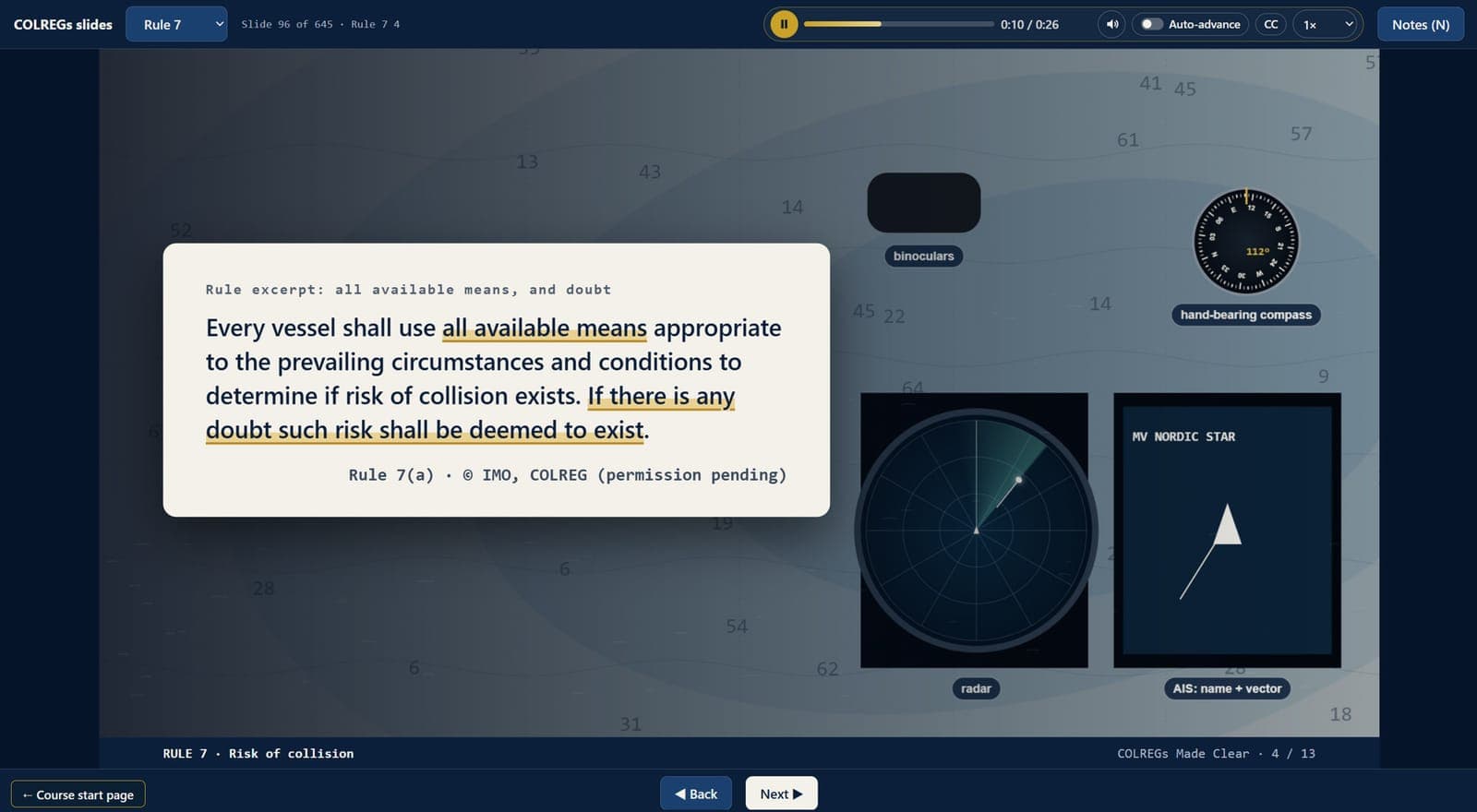
Where the rules apply, who is responsible, the key definitions and keeping a proper lookout.
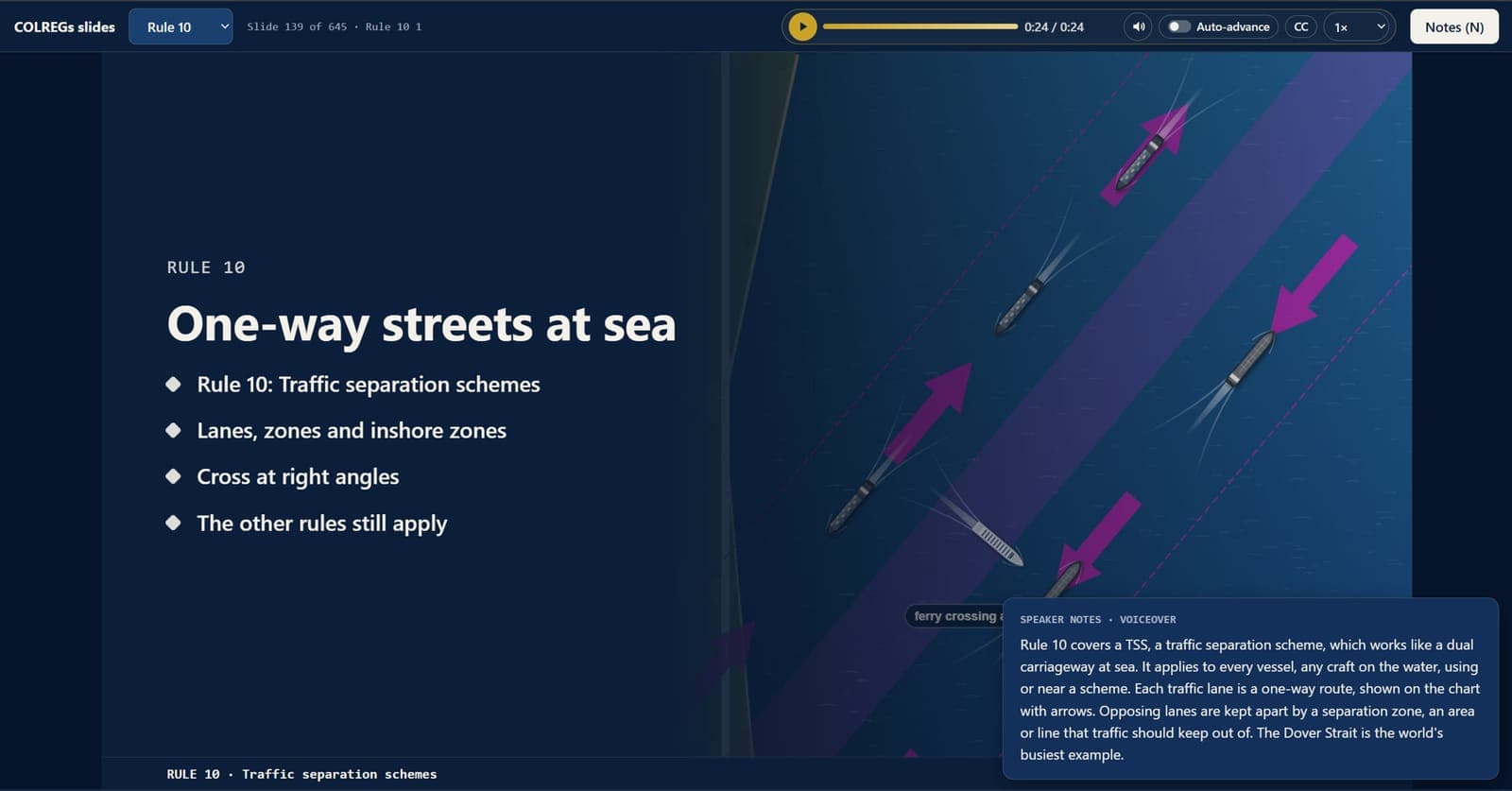
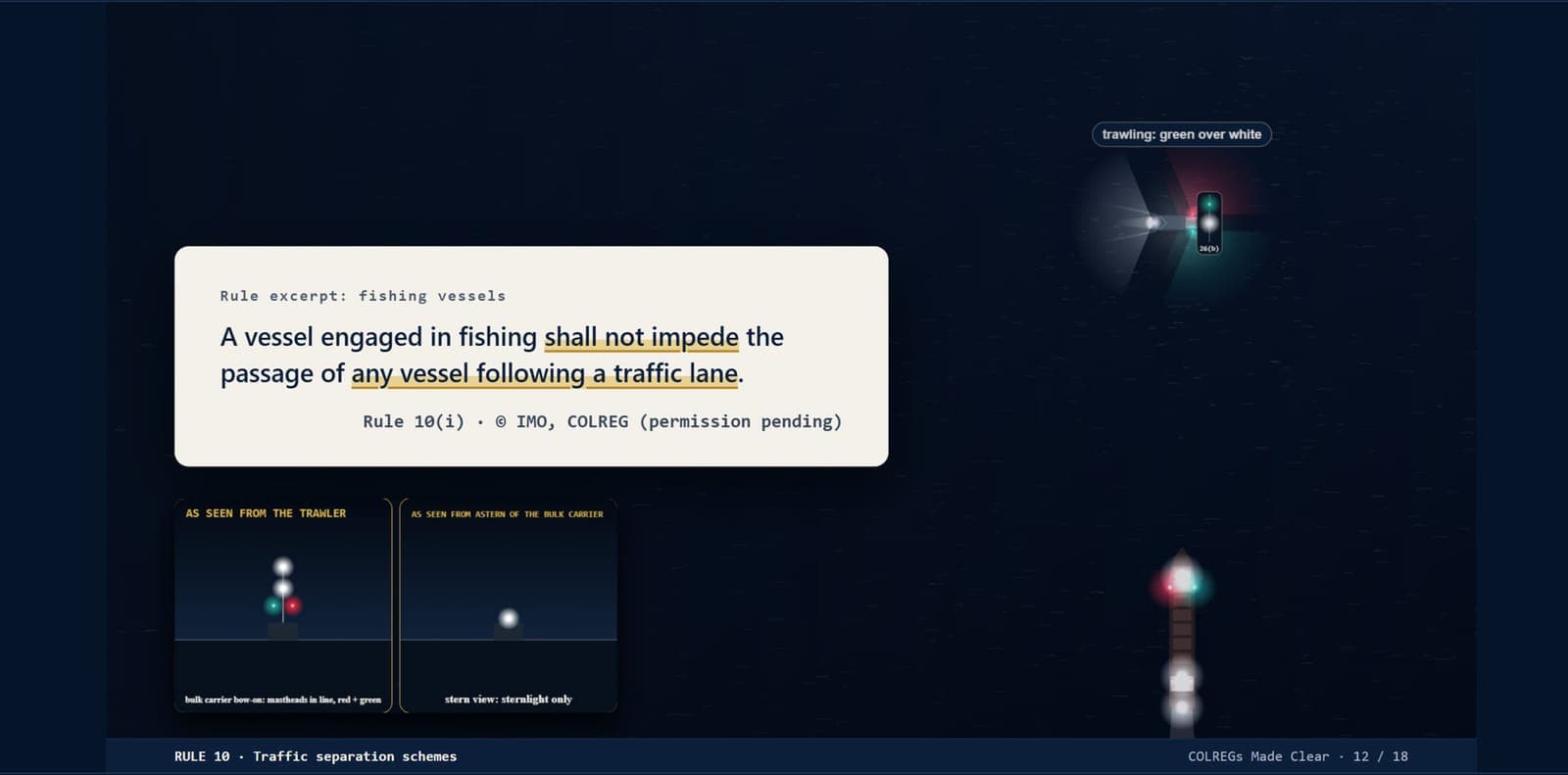
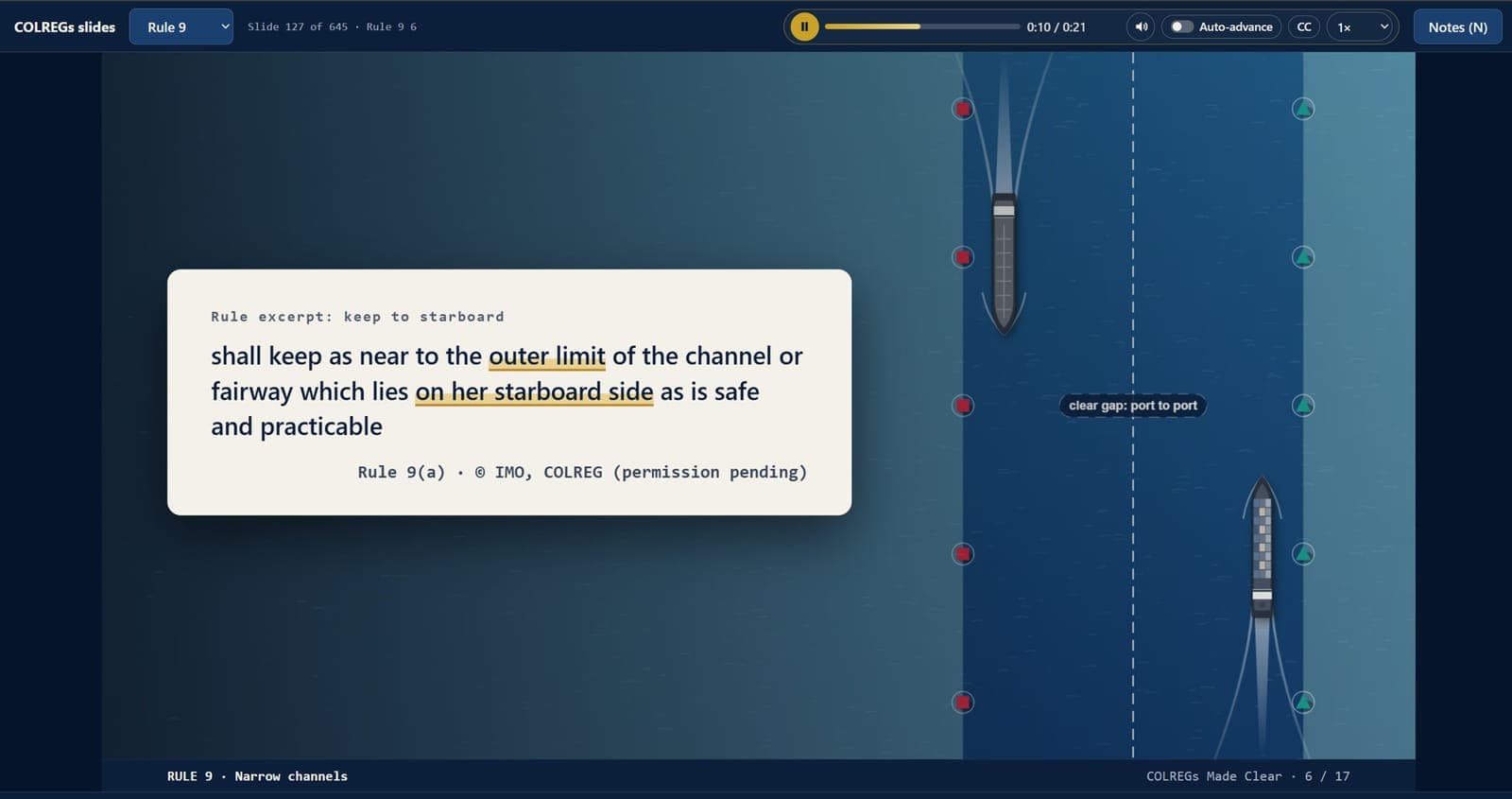
Safe speed, risk of collision, action to avoid collision, narrow channels and traffic separation schemes.
Sailing vessels, overtaking, head-on, crossing, give-way and stand-on duties, and responsibilities between vessels.
Conduct when vessels cannot see one another, including action on radar contacts alone.
Application, definitions, visibility of lights, power-driven vessels under way, and towing.
Sailing vessels, fishing vessels, vessels not under command and restricted in their ability to manoeuvre, constrained by draught, pilots, anchored and aground, seaplanes and WIG craft.
Whistle and bell signals, manoeuvring and warning signals, distress signals, exemptions and compliance.
Positioning and technical details of lights and shapes, additional signals for fishing vessels, sound appliances and distress signals.
A mixed final assessment across every rule and annex.
The course follows the International Regulations for Preventing Collisions at Sea, 1972, as amended. The regulations are published by the International Maritime Organization. Rule text © IMO.
Yes. It is a self-paced COLREGs course online. Narrated lessons, interactives, an encounter simulator and quizzes run in your browser after you enrol.
Yes. COLREGs, IRPCS and the maritime Rules of the Road are the International Regulations for Preventing Collisions at Sea. The course follows them from Rule 1 to Rule 41 and the four annexes.
The quizzes are built as COLREGs exam practice, with an 80% pass mark to move on. The certificate shows you finished this Sea Skills Online course. Your college, flag state or examining body marks its own paper.
Rules 20 to 31 are Blocks 4 and 5 of this course. Buoyage, lights and shapes is a separate course for the IALA marks and for more recognition drill.